Tuesday, 10 November 2015

Sunday, 4 October 2015
Cool Features to checkout.
I will just share the link click on the link to get the most of it.http://www.prophethacker.com/2015/07/useful-tech-hacks-tricks.html
Saturday, 15 August 2015
Dreams as Virtual Reality Simulations
Dreams as Virtual Reality Simulations
REM sleep taps a vast network of brain structures to simulate alternate worlds
Sunday, 19 July 2015
Robots passes self awareness test

Image: Motherboard
A robot has just passed a classic self-awareness test for the first time
It thinks, therefore it is.
FIONA MACDONALD
17 JUL 2015


A researcher at Ransselaer Polytechnic Institute in the US has given three Nao robots an updated version of the classic 'wise men puzzle' self-awareness test... and one of them has managed to pass.
In the classic test, a hypothetical King calls forward the three wisest men in the country and puts either a white or a blue hat on their heads. They can all see each other's hats, but not their own, and they're not allowed to talk to each other. The King promises that at least one of them is wearing a blue hat, and that the contest is fair, meaning that none of them have access to any information that the others don't. Whoever is smart enough to work out which colour hat they're wearing using that limited information will become the King's new advisor.
In this updated AI version, the robots are each given a 'pill' (which is actually a tap on the head, because, you know, robots can't swallow). Two of the pills will render the robots silent, and one is a placebo. The tester, Selmer Bringsjord, chair of Rensselaer’s cognitive science department, then asks the robots which pill they received.
There's silence for a little while, and then one of the little bots gets up and declares "I don't know!" But at the sound of its own voice it quickly changes his mind and puts its hand up. "Sorry, I know now," it exclaims politely. "I was able to prove that I was not given the dumbing pill."
You can see the adorable test in the footage from Motherboard below:
It may seem pretty simple, but for robots, this is one of the hardest tests out there. It not only requires the AI to be able to listen to and understand a question, but also to hear its own voice and recognise that it's distinct from the other robots. And then it needs to link that realisation back to the original question to come up with an answer.
But don't panic, this isn't anything close to the type of self-awareness that we have as humans, or the kind that the AI Skynet experiences in The Terminator, when it decides to blow up all humans.
Instead, the robots have been programmed to be self-conscious in a specific situation. But it's still an important step towards creating robots that understand their role in society, which will be crucial to turning them into more useful citizens. "We’re talking about a logical and a mathematical correlate to self-consciousness, and we’re saying that we’re making progress on that," Bringsjord told Jordan Pearson at Motherboard.
Right now, the main thing holding AI back from being truly self-aware is the fact that they simply can't crunch as much data as the human brain, as Hal Hodson writes for New Scientist: "Even though cameras can capture more data about a scene than the human eye, roboticists are at a loss as to how to stitch all that information together to build a cohesive picture of the world," he says.
Still, that doesn't mean that we don't need to be careful when creating smarter AI. Because, really, if we can program a machine to have the mathematical equivalent of wants and desires, what's to stop it from deciding to do bad things?
"This is a fundamental question that I hope people are increasingly understanding about dangerous machines," said Bringsjord. "All the structures and all the processes, informationally speaking, that are associated with performing actions out of malice could be present in the robot."
Bringsjord will present his research this August at the IEEE RO-MAN conference in Japan, which is focussed on "interactions with socially embedded robots".
Oh, and in case you were wondering, the answer to the King's original 'wise men test' is that all the participants must have been given blue hats, otherwise it wouldn't have a been fair contest. Or at least, that's one of the solutions.
Thursday, 21 May 2015
Apple Possibly Making Its Own Search Engine to Challenge Google
Apple Possibly Making Its Own Search Engine to Challenge Google
 Apple has finally confirmed that it is having a web crawler Applebot which indicates its possible future in the search business. Apple has recently added a new page to its support site that gives details about its first Web Crawler.
These rumors regarding an Apple search engine starting spreading when webmasters noticed web crawlers visiting their websites with IP addresses beginning with 17. It was surprising because the IP address block starting with 17 is completely owned by Apple.
Whereas the iPhone maker has said that this web crawler is used by the Siri and Spotlight development teams to improve the search results. Now the company has published a help document confirming the existence of the Applebot – Apple’s web crawler.
Apple says that it respects the usual robot.txt rules and meta tags i.e. the same rules followed by the Googlebot. Search Engine Land writes that the user-age typically follows the following string but always contains “Applebot” in it:
Mozilla/5.0 (Macintosh; Intel Mac OS X 10_10_1) AppleWebKit/600.2.5 (KHTML, like Gecko) Version/8.0.2 Safari/600.2.5 (Applebot/0.1)
Right now, Apple’s plans regarding an Apple search engine are unclear. Its arrival to the search engine market will be a bit late compared to its competitors like Microsoft, Yahoo and Google. The market analysts have claimed that there is a 70 percent chance that Apple would be coming to the search engine space.
The search engine rumor was also fuelled few weeks ago when a job vacancy (now removed) was found on the web. The job vacancy was regarding a search manager to work on a “search platform supporting hundreds of millions of users” and “play a part in revolutionizing how people use their computers and mobile devices.”
Apple’s deal to use Google as the default search engine on iOS is going to expire soon and this could be the perfect time.
Thanks:fossbytes
Internet Without Data Connection? Use Pangea With Data-Over-Voice
Internet Without Data Connection? Use Pangea With Data-Over-Voice

Life without internet is nearly unimaginable in the recent times. It is hardwired and deep-rooted into our daily life and routine. Everyone needs to access internet for myriad reasons, but the reality is that don’t all have access to it. As it is said where there is a problem, there are solutions to it as well. Same is true in this case.
Pangea has taken the initiative to get the unconnected people online by using a much familiar concept in a brand new way: sending and receiving data over infrastructure used to send voice calls. It should be noted that a promising startup named Outernet is already providing free internet in many parts of the world.
The idea may seem to be obsolete, yet it is much promising and far more intricate. Their method involves turning data into a sound wave, modifying it to a human voice to a Telco’s end, and then retrieving it back to data on the user’s device.
Every single time the user wants to send an email or check twitter, it will make a call (nearly 10 sec) and transfer the requested data at up to 64 kilobits per second. For now, Pangea is only available for text content but co-founder Vlad Iuhas said that over time, it will provide full android experience but it can be a bit slower.
To get access to internet through Pangea, one requires installing an app on the phone which is yet again problematic as the user has to use internet. The startup’s intermediate solution is to have an initial user in a city or town who downloads the app and then transfers it to the village residents via Bluetooth or such media.
The company is planning to open service in Nigeria this summer, working with one of the Africa’s largest wireless carriers. If that goes well, the company will deploy the service across the continents in near future.
They are surely aiming high as they aspire to connect each and everyone around the globe. The task is obviously not so easy, but living in a world brimming with possibilities and opportunities, everything is possible. So, we are looking at this tech with lots of excitement and expectancy and wish its success.
Facebook is Going to Sell Second-hand Products in Your News Feed
Facebook is Going to Sell Second-hand Products in Your News Feed

It’s a well-established fact that Facebook wants to have it all. After the recent news of a new in-app search engine to take on Google, this time Facebook is targeting eBay with a new page that shows a sale of second-hand items across the groups. With this option, you can sell your second-hand items and search the public group to buy such products.
Earlier this year, it was reported that Facebook has started supporting a new type of “buy and sell” groups where users can list their items along with the prices, pictures, place of availability and the description. This new step is being seen as the next step to that strategy.

This was reported by The Next Web that says that this feature will be rolled out in upcoming weeks to compete with the online retailers like eBay and Craiglist.
The search tool of Facebook will now support these new features along with the category filter for different types of items. These categories include mobile phones, coins, clothes, health and beauty, automobiles and more.

These products won’t be owned by Facebook, the social networking website will be just providing a platform to the users. With a public profile attached to an item, the buy and sell business of Facebook could become more trustworthy as compared to eBay and Craigslist where the sellers have some anonymity.
TNW writes that this feature is under testing right now and it will be rolled out in the upcoming weeks.
Did you like the idea of a second-hand goods shop on Facebook? Tell us in comments below!
Thanks:fossbytes
Easy-to-use TunnelBear Chrome Extension Brings VPN Services to Everyone
Easy-to-use TunnelBear Chrome Extension Brings VPN Services to Everyone

TunnelBear is one of the most loved VPN (Virtual Proxy Network) services because of its simplicity and clean interface. Now, the company has decided to make this service even handier by launching an extension for your Google Chrome browser. So, now you can maintain your privacy more easily.
Keeping aside the advantages of the anonymity, VPN services are of interest to those who are in the countries where some services like Spotify, Netflix aren’t available or some of the services are blocked. After installing the extension, the free users will get 750MB, but TechCrunch writes that TunnelBear will soon offer 1GB.
Currently, this VPN extension is available only for Google Chrome. TunnelBear plans to release the extension for other browsers including Safari, Firefox etc
In an interview with TechCrunch, TunnelBear co-founder Ryan Dochuk said: “Our goal is to make [using a VPN] as easy and accessible as possible. The extension is so fast and so easy that you should be using it in your everyday internet activity.”
This TunnelBear extension for Chrome isn’t a full-fledged VPN. It doesn’t handle data only from your browser instead of your entire system. So, for browsing purposes and watching Netflix in the unsupported countries, it is a good option.
TunnelBear, based in Toronto, was founded in 2011 and provides its service to 5 million people all over the world.
Here are some of the services provided by the TunnelBear extension for Chrome:
- Stop web sites and advertisers from tracking you.
- While using public WiFi, secure your browser’s identity.
- Free data every month.
- Take the advantage of a fast VPN private network with connections to 14 countries.
I’ve installed and used the TunnelBear extension for Chrome and it does what it needs to do. It should be noted that it uses the AES 128-bit encryption instead of the better AES-256 encryption used by the usual TunnelBear app.
Try it out from the link given below:
Do you use VPN services? Tell us in the comments below!
Thanks:fossbytes
Facebook is Bringing Games to its Messenger App
Facebook is Bringing Games to its Messenger App
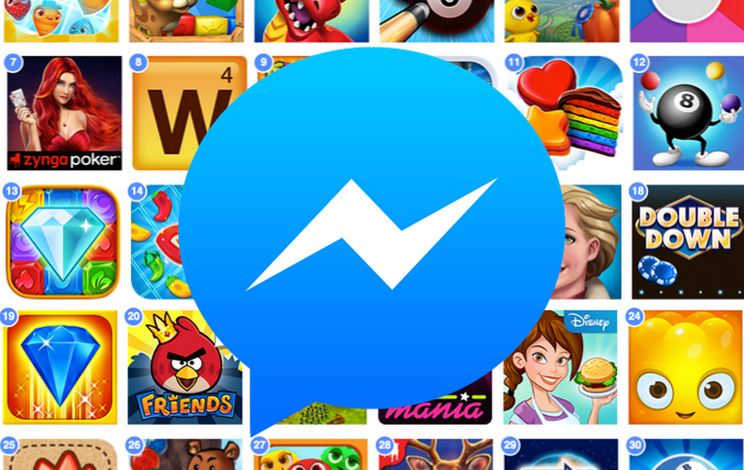
It seems as if gaming will be just another thing in the catalogue of Facebook Messenger. The social networking website is reportedly in talks with game developers to bring games to the Messenger platform. This is being seen as a move to generate more revenue as games are addictive and people find it hard to ditch.
Earlier this year at Facebook F8 developer conference, Facebook announced its plans to develop Messenger as a platform and the first suite of additions to the Messenger were emojis, gifs, sound clips etc. The Information reports that Ilya Sukhar, the executive at Facebook confirmed such discussions but didn’t give any tentative launch date.
I’m personally not much optimistic about these Messenger games as the first phase of apps hasn’t been a great success and the third-party developers didn’t find it much attractive enough to devote their time to the platform.
But, this slow traction and wish to generate more revenue is the driving force behind this decision. Currently, Facebook Messenger has more than 600 million active users and if harnessed properly by the Mr. Zuckerberg, it could become his favorite giant money making beast.
The Information writes:
"While a move to broaden the range of apps on the platform was to be expected, it takes on greater significance given indications that people have been slow to engage with the current slate of Messenger apps."
This is not clear if the Facebook will allow third-party games to run inside the Messenger app, or the users will have to install another supporting app.
Did you like the idea of games in Facebook Messenger? Tell us in the comments section below.
Thanks:fossbytes
Wednesday, 8 April 2015
How To Share PDF, ZIP & APK Files on WhatsApp
With almost 600+ million users, WhatsApp is no more anonymous to anyone. Whether it’s you or me, no one can spend even few hours without using this amazing instant messaging client. Apart from live chat, mesmerising features like sharing media and other data are the key features that allows WhatsApp to hold number of users with it. Even though Whatsapp is now owned by Facebook, it doesn’t have the feature to send PDF, Apk or Zip files on it like the Facebook messenger. You can anyway share any video, image, audio or any other type of file through third-party sources without compromising quality and share them with your buddies. However, it can be a bit lengthy. So, have a look on some easy steps to share media to your friends with no loss of quality.

STEPS TO BE FOLLOWED :-
- First of all, download and install the official Dropbox app. There is no problem if you have Dropbox account already. Signup for an account if you don’t have one. Login to it.
- Then download and install CloudSend. When you launch the app, you will go through a quick tour. All you have to do is swipe from right to left on your device’s screen. It will ask you to authorize this app by the end. Then click Allow. In your Dropbox folder, a folder will be automatically created by the name “CloudSend”. You will be able to control it completely. Now you can close the app after completing the authorization.
- In order to send any type of file, press and hold the file through file manager and choose Share button.
- Choose CloudSend option from popup.
- Hold on while the selected file is being uploaded on CloudSend folder created on Dropbox. The duration of file transfer vary according to the connection speed and size of file. The best part of CloudSend is that it doesn’t have any restrictions regarding file size. You will have two options after completion of upload – Copy and Share. Either you can share the file or copy the link of any file directly.
- When you select Share, you will be able to share your file in different platforms like Email, Whatsapp, SMS, Google+, WeChat, Facebook and other applications your device have. Select WhatsApp.
- It will prompt you to choose WhatsApp contacts you want to share that link with. Share that link with your desired recipient. It will show link with file name. If file is supported on your friend’s device, it will show the preview of file. Or file can also be downloaded through other browsers THANKS-TECHEWS
Subscribe to:
Posts (Atom)
Thanks:psychologytoday