Monday, 16 March 2015

How to Activate WhatsApp Voice Calling

How to Activate WhatsApp Voice Calling

whatsapp_android_voice_calling_screen_1.jpg
WhatsApp's voice calling feature is now available to all Android users. The world's most popular messaging app with over 700 million monthly active users only introduced this feature recently and rolled it out gradually to its Android users. If you are not an Android user, you'll just have to wait a little longer to get this feature. But if you use Android, and haven't yet activated voice calling on WhatsApp, what are you waiting for?
The process isn't as simple as updating WhatsApp to start using the voice calling features. It involves a couple more steps that you need to follow. We've described these below, so take a look to enable voice calling on WhatsApp for Android.
  1. Download the latest version of WhatsApp for Android from here. The latest version on WhatsApp's website is 2.12.7, but if you're downloading from Google Play, ensure that your device has version 2.11.561. Older versions don't support this feature for all users.
  2. Once you have the latest version of WhatsApp installed on your Android phone, ask someone who has WhatsApp calling enabled to make a WhatsApp call to your number.
  3. Multiple users have reported that giving a missed call doesn't work. You'll have to receive the call and wait for a few seconds before disconnecting to activate WhatsApp voice calling.
  4. When the feature is enabled on your smartphone, you'll see a new three-tab layout on WhatsApp, one each for Calls, Chats and Contacts.
Thanks:NDTv

Thursday, 12 March 2015

Microsoft Investing in Cyanogen, Which Wants to Take Android from Google!!!!!!!!!!!!!!

Microsoft reportedly to invest in CyanogenMod Android team

We've recently seen some big moves on Android by Microsoft. It released its 'crown jewels' Office apps for Android tablets and launched a new Outlook app on Android and iOS earlier this week. Now, according to the Wall Street Journal, Microsoft is investing cash, possibly millions, to back the CyanogenMod Android team.
Google supplies its Android OS to device makers for free as long as they feature the Google app suite and set Google Search as the default search provider. Often that's good for people, as many users prefer Google web services such as its Search, the Chrome browser, the popular YouTube video app and access to the Play Store app. However makers of rivals to those key services like Microsoft, Yahoo and Mozilla, to name a few, don't like how their apps/services are sidelined.
Cyanogen are makers of the CyanogenMod ROMs that offer an "enhanced open source firmware distribution" of Android for many popular smartphones. As well as the promise of enhancements and better performance Cyanogen Mod promises that it doesn't package any spyware or bloatware. It is developed as free and open source software based on the official releases of Android by Google.
Another benefit CyanogenMod users might find is that their device gets more timely and newer updates – many who have found that their smartphone has been practically abandoned by the original maker, as far as any updates are concerned, can get an updated more modern Android OS via Cyanogen. The WSJ reports that Cyanogen has 80 full time staff and "a volunteer army of 9,000 software developers working on its own version of Android". There are said to be 50 million users of Cyanogen Android.
Cyanogen wants to grow faster and to do so it intends to invest in deals with hardware partners. That helps people get this version of Android straight away, with no need for any worrying technical twiddling with their often expensive smartphones.
The firm is confident of success; "We're going to take Android away from Google," asserted Kirt McMaster, Cyanogen's chief executive last week. Microsoft must feel that the firm has some chance as it is reportedly a 'minority investor' in a recent $70 million financing round.
We might have already seen Google flinch following Microsoft's recent Outlook on Android launch. Google has been rationing 'invites' for its revamped mail client called 'Inbox' but yesterday offered unlimited invites for 24 hours (6 hours left). The offer coincided with Microsoft's Outlook on Android and iOS launch. Microsoft's bought-in app (was previously Accompli) has already been described as one of the best mobile email apps available.
Thanks:Hexus

Saturday, 7 March 2015

Beware of uTorrent

uTorrent Installs a Bitcoin Miner to Steal CPU Power from Your PC

uTorrent is one of the most popular torrent clients out there and a new update in the software has brought some unwanted package along with itself. Along with the new update, your PC may be running a Bitcoin miner as a background process without letting you know.
This new upgraded version is 3.4.2 build 28913. Many uTorrent users have reported this on forums. People were shocked to notice the sharp increase in the CPU usage after the update. On investigating furthermore, it was found that uTorrent itself wasn’t using the CPU power, instead it was being done by a software called EpicScale, which is a Bitcoin mining application.

What is Bitcoin and bitcoin mining?

Bitcoin is a type of digital currency which uses several encryption techniques for regulation of generation of currency units and fund transfer verification. No one prints it or controls it. It’s controlled and generated by lots of people all around the world by solving mathematical problems using software. This creation of bitcoins is called mining and users are rewarded by fresh bitcoins and transaction fees.
Bitcoin has been a part of BitTorrent’s experiment since years as a banner ad in uTorrent to monetize it. It’s possible that BitTorrent has partnered with EpicScale to increase its income. This is cool and none of our business, but the twist comes when users report that the update doesn’t mention any instance of warning or notice.
Also, know ways to download torrent files without using uTorrent or other clients.
Using user’s CPU power this way is a serious infiltration. The parent company BitTorrent replied to the queries that they’ve scanned their installer and uTorrent doesn’t do such activity without user’s consent. Some users have updated the uTorrent (including me) and they didn’t find EpicScale being forced via the installation.

So what’s the truth and what to do?

It may be some kind of error at the distribution partner end. There’s another possibility that users forgot to read the warning and continued to install this risky update.
If you’re noticing a sharp rise in CPU usage after the update, check if there’s some program named EpicScalei running in your system. Check this by going to Programs and features in Control Panel or via Task Manager.
Be safe.
Thanks:fossbytes

Monday, 2 March 2015

DNA Hard Drive Capable of Holding Data for One MILLION YEARS

DNA Hard Drive Capable of Holding Data for One MILLION YEARS


dna-data-storage-hard-drive
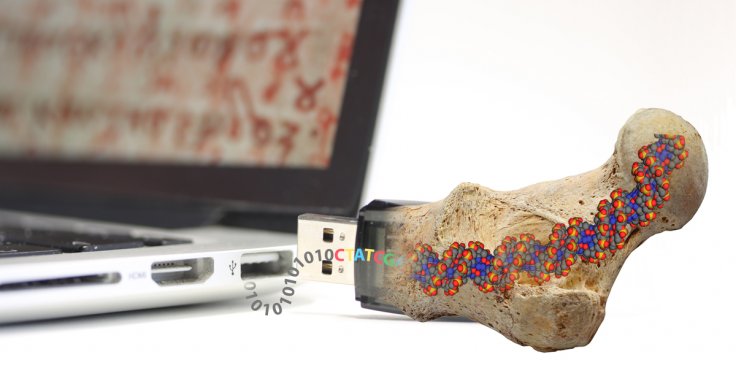
Imagine holding the information of the entire world. Now imagine storing that data and preserving it for a million years. Freaking out yet? Well, now what would you say if I said that all that information could be stored for a million freaking years in a time capsule? Not a big one- tiny, you could say.
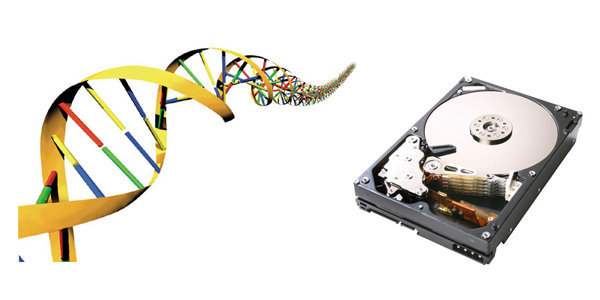
Our conventional hard drives stores up to, well, a terabyte of data or two? What would you say if I say that this very capsule could store data so much as billions of terabytes? What if I say that it is possible to code DNA so that it could store such vast amount of information?
Freak out no more – such hard drive fabricated from DNA has been built. Before I leave you to freak out over its possible implications which are tremendously huge, here’s some awesome stuff. Basically, scientists always knew that DNA is perfect for storing information. Theoretically, one gram of DNA can store about 455 Exabytes (one Exabyte is equivalent to one billion gigabytes). This space is enough to store whole of Wikipedia and Facebook. How cool is that?
Interestingly, storing information on DNA is quite simple. One simply has to program the A and C base pairs of DNA as a binary ‘0’, and the T and G as a ‘1’. The question is, how long would the data be stored?
In 2013, scientists managed to sequence genetic code in 700,000-year-old bones of a horse. The problem is the storage of the code. The conditions of storage must be well defined. Otherwise, on exposure to the environment, it can change and breakdown. Recently another type of data storage method was being talked about- the IBM’s racetrack memory to kill the hard drive it invented.dna hard drive
In order to do that, scientists encoded ‘Switzerland’s Federal Charter of 1921’ and ‘The Methods of Mechanical Theorems’ by Archimedes onto a DNA strand. That sums up to 83 kilobytes of data. These strands of DNA were then encapsulated into tiny glass spheres, about 10 nanometers in diameter. Then this glass packaging was compared to other methods of packaging by subjecting each package to temperature conditions about 60 to 70 degree Celsius-conditions that replicated the chemical degradation that would usually occur over hundreds of years, all crammed into a few destructive weeks.
Even after this sped-up degradation process, it was found that the DNA inside the glass spheres could be recovered using a simple fluoride solution. The data could still be read. The glass spheres in this case worked pretty much like fossilized bones.
It is predicted that the data on the DNA strand could be preserved for more than a million years provided it is stored below -18 degrees Celsius. It could be stored for more than a thousand years if stored below 10 degrees at specific conditions.
The major setback to this DNA hard drive is its cost- one hard drive could be as expensive as $1500. Researchers and scientists are already storing data into these DNA hard drives. And the band OK Go are also storing their records in it.
I wonder if you can handle the overwhelming awesomeness when you realize that the whole of Wikipedia and Facebook could be stored in one small time capsule.